
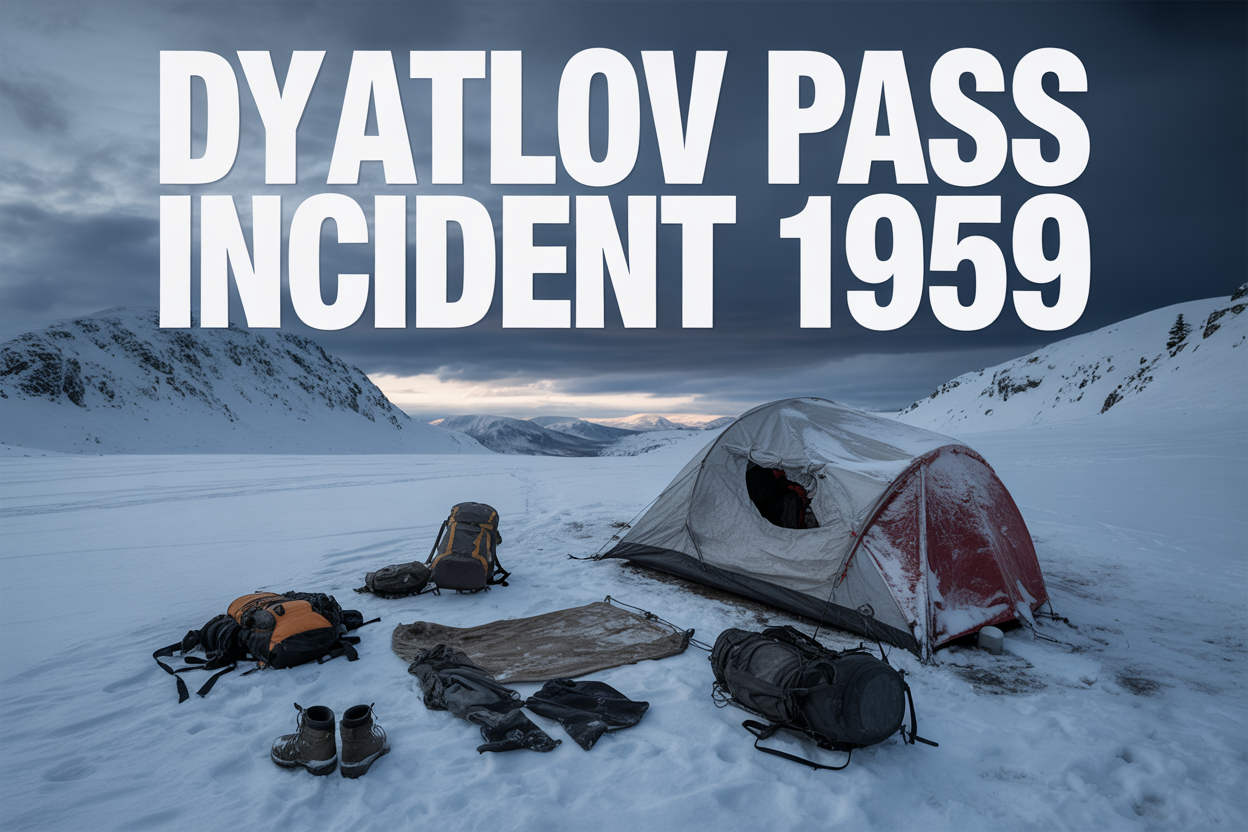
The Dyatlov Pass mystery remains one of the most chilling unsolved cases you’ll encounter in modern history. In February 1959, nine experienced hikers died under bizarre circumstances in Russia’s remote Ural Mountains, creating a tragedy that has puzzled investigators and captivated mystery enthusiasts for over six decades.
This deep dive into the 1959 Dyatlov incident theories is perfect for you if you’re fascinated by unsolved mysteries, historical cold cases, or simply want to understand what really happened on that fateful night. You’ll discover why this Ural Mountains hiking tragedy continues to generate debate among experts and amateur sleuths alike.
We’ll walk you through the shocking discovery that launched decades of speculation, examine the official investigation findings that left more questions than answers, and explore the most compelling theories that attempt to explain this haunting mystery. You’ll also learn about recent developments where modern investigators have applied new technology and methods to uncover Dyatlov Pass evidence explained through fresh perspectives.
Get ready to explore every angle of this enduring enigma that has spawned countless documentaries, books, and heated discussions among true crime fans worldwide.
Background of the Dyatlov Pass Expedition

Meet the Nine Experienced Hikers Who Never Returned
You’d be hard-pressed to find a group better prepared for winter hiking than Igor Dyatlov’s team. At just 23 years old, Dyatlov was already a seasoned mountaineer with multiple challenging expeditions under his belt. As the group leader, he carefully selected eight other experienced hikers from the Ural Polytechnical Institute for what would become the most infamous Ural Mountains hiking tragedy in history.
Your understanding of this group’s expertise becomes clear when you examine their backgrounds. Rustem Slobodin and Zinaida Kolmogorova were both skilled skiers and hikers who had tackled difficult terrain before. Lyudmila Dubinina, the group’s photographer, brought technical climbing experience that proved invaluable on previous expeditions. The team also included Alexander Kolevatov, a physics student known for his methodical approach to route planning.
What makes their fate even more puzzling is that this wasn’t their first rodeo. You’re looking at hikers who had collectively completed dozens of challenging winter expeditions across the Soviet Union. They understood hypothermia risks, avalanche dangers, and wilderness survival better than most outdoor enthusiasts today. Each member held at least a Grade II hiking certification, with several possessing the more advanced Grade III rating required for the most demanding routes.
The group’s preparation was meticulous. They packed specialized cold-weather gear, emergency supplies, and enough food for their planned route plus several extra days. Their equipment list reads like a modern wilderness survival manual, complete with repair kits, navigational tools, and medical supplies.
Understanding the Challenging Ural Mountains Terrain
Your appreciation for the Dyatlov Pass mystery deepens when you grasp just how unforgiving the Ural Mountains can be in winter. This ancient mountain range stretches over 1,500 miles from the Arctic Ocean to Kazakhstan, creating a natural barrier between Europe and Asia. The region where the tragedy occurred sits in the northern section, where temperatures regularly plummet to -40°F and fierce winds can create whiteout conditions in minutes.
You’ll find that the terrain itself presents unique challenges that even experienced hikers struggle with. The rolling hills and sparse vegetation offer little natural shelter from the elements. Tree lines sit much lower than in other mountain ranges, meaning hikers quickly find themselves exposed on bare slopes where wind speeds can reach hurricane force.
The area’s weather patterns are notoriously unpredictable. You might start your day in relatively calm conditions only to face sudden temperature drops and violent storms by afternoon. Local indigenous peoples, the Mansi, had long avoided certain areas during winter months, considering them too dangerous for travel.
Snow conditions add another layer of complexity. The region experiences frequent thaw-freeze cycles that create unstable snow layers. What appears solid underfoot can suddenly give way, and avalanche risks remain present even on seemingly gentle slopes. The combination of wind and snow creates a disorienting environment where visibility drops to mere feet, making navigation extremely difficult even for skilled mountaineers.
Discover Why They Chose This Remote Winter Route
Your curiosity about their destination choice reveals the ambitious nature of this expedition. The team planned to reach Otorten, a mountain whose name translates to “Don’t go there” in the local Mansi language – an ominous warning that would prove tragically prophetic. This wasn’t a casual weekend trip; it was a carefully planned Grade III difficulty expedition designed to earn them advanced mountaineering certifications.
You should know that reaching Otorten in winter represented a significant achievement in Soviet mountaineering circles. The route required technical skills, physical endurance, and mental toughness that would impress even today’s extreme sports community. Successfully completing this expedition would have elevated each member’s status within the hiking community and opened doors to even more challenging future expeditions.
The timing of their journey – late January to early February – was specifically chosen to maximize the challenge. Winter conditions would test every aspect of their skills, from navigation in whiteout conditions to managing equipment in extreme cold. The group wanted to prove their capabilities during the harshest season possible.
Their route selection also served practical purposes. The planned path would take them through varied terrain types, allowing them to demonstrate proficiency in different winter hiking scenarios. They intended to document their journey extensively, contributing valuable information to the Soviet mountaineering community about winter travel in this remote region.
The Dyatlov Pass evidence explained later would show just how well-prepared they were for this challenge, making their ultimate fate all the more mysterious and compelling for investigators decades later.
Timeline of Events Leading to the Tragedy

January 23-27: The Journey to the Mountains Begins
When you look at Igor Dyatlov’s meticulously planned itinerary, everything appears routine for an experienced hiking group. On January 23, 1959, ten students from the Ural Polytechnical Institute departed Sverdlovsk (now Yekaterinburg) by train, bound for Ivdel. You can imagine their excitement as they prepared for what should have been a challenging but standard winter expedition in the northern Urals.
The group’s spirits were high during these initial days. Your typical winter hiking preparation was evident – they organized their gear, reviewed their route, and settled into the rhythm that experienced hikers know well. On January 25, they reached Ivdel by train and spent the night there before continuing their journey by truck to Vizhay on January 27.
One crucial detail stands out during this phase: Yuri Yudin, one of the ten original members, fell ill and had to turn back. His decision to leave the group likely saved his life, though you wouldn’t know it at the time. This left nine hikers to continue the Dyatlov Pass mystery that would capture the world’s attention for decades.
The remaining team members were all experienced in winter camping and mountain hiking. They had proper equipment, food supplies, and the skiing skills necessary for traversing the snowy Ural Mountains terrain ahead of them.
January 28-31: Last Known Communications and Movements
Your understanding of the group’s final days relies heavily on their own documentation. The hikers maintained detailed diaries and took photographs that would later become crucial evidence in understanding this Ural Mountains hiking tragedy.
On January 28, the group began their trek from Vizhay toward their ultimate destination – Otorten Mountain. They used skis to traverse the snow-covered landscape, pulling sleds loaded with their camping equipment and food supplies. The weather was manageable, and their progress followed the expected timeline.
January 30 marked a significant moment in their journey. The team decided to cache excess food and equipment in the forest to lighten their loads for the final push to Otorten. This strategic decision was standard practice for experienced hikers, but it would later complicate search efforts when investigators tried to piece together their movements.
Your last glimpse of the group’s planned activities comes from January 31. They were making steady progress through the wilderness, following their intended route. The photographs from their cameras show them in good spirits, working together to set up camps and navigate the challenging winter terrain. Nothing in their documentation suggests any immediate danger or unusual circumstances that would explain what happened next.
February 1: The Night Everything Went Wrong
This date represents the most haunting mystery in the Dyatlov Pass evidence explained by investigators over the years. You’re looking at the night when nine experienced hikers met their inexplicable fate on the slopes of what locals called “Dead Mountain.”
Weather conditions deteriorated significantly on February 1. The group found themselves battling strong winds and reduced visibility as they attempted to reach Otorten Mountain. Instead of descending to the protected forest area as planned, they made the fateful decision to pitch their tent on the exposed eastern slope of Kholat Syakhl.
Based on the physical evidence discovered later, you can reconstruct that something extraordinary happened during the night of February 1-2. The hikers cut their way out of their tent from the inside – not through the entrance, but through the tent walls themselves. They fled into the brutal winter night wearing minimal clothing, with temperatures dropping to -25°F (-32°C).
The 1959 Dyatlov incident theories have tried to explain why experienced mountaineers would abandon their shelter in such conditions. The tent remained largely intact with their belongings, food, and warm clothes still inside. Your imagination struggles to comprehend what could have driven them to make such a desperate escape into the deadly cold of the Ural Mountains.
February 2-26: When Search Efforts Finally Began
You might expect immediate search efforts when experienced hikers fail to return, but the timeline reveals a frustrating delay. The group had planned to send a telegram to their sports club upon reaching Vizhay on February 12. When this communication never arrived, initial concern was muted because delays were common on difficult winter expeditions.
Serious search efforts didn’t begin until February 20, when the families and the institute finally organized rescue teams. By this time, nearly three weeks had passed since the incident occurred. You can imagine how the harsh winter conditions would have affected any evidence left at the scene.
The first breakthrough came on February 26 when searchers discovered the abandoned tent on the mountain slope. The sight that greeted them defied explanation – a tent cut open from the inside, with all the hikers’ belongings neatly arranged as if they had been preparing for bed. Footprints led away from the tent toward the forest edge, but these tracks showed that some hikers were barefoot or wearing only socks in the snow.
Your understanding of the search timeline helps explain why this case remains so mysterious. The three-week delay meant that crucial evidence was buried under snow, scattered by wind, or otherwise compromised. This timing gap continues to fuel debates about what really happened during those final hours on Dead Mountain, making the Dyatlov Pass mystery one of the most enduring unsolved cases in modern history.
Shocking Discovery of the Campsite and Bodies

Tent Found Cut Open From the Inside in Mysterious Circumstances
When you examine the search team’s initial findings, the tent discovery stands out as one of the most puzzling pieces of the Dyatlov Pass mystery. The rescue team found the hikers’ tent partially collapsed under snow on February 26, 1959, nearly three weeks after the group had vanished. What immediately caught their attention wasn’t just the abandoned shelter, but how the occupants had left it.
You’ll find that the tent showed multiple cuts made from the inside, suggesting the hikers had slashed their way out in desperation. These weren’t small tears or accidental damage – they were deliberate slashes through the canvas, large enough for people to crawl through. The positioning of these cuts told a story of panic, as if something had forced the group to abandon their warm shelter immediately, without time to use the entrance.
Inside the tent, your investigation would reveal that most of the group’s belongings remained untouched. Shoes, warm clothing, and essential survival gear lay scattered as if the hikers had fled in their sleeping clothes. The tent’s interior showed no signs of a struggle or attack, making the emergency exit even more baffling.
First Bodies Located: Barefoot in Sub-Zero Temperatures
Your understanding of this tragedy deepens when you learn about the first bodies discovered. On February 26, 1959, searchers found two bodies near the remains of a small fire, approximately 1.5 kilometers from the tent. Yuri Krivonischenko and Yuri Doroshenko were found shoeless and wearing minimal clothing despite the brutal -25°F to -30°F temperatures that night.
When you look at the evidence, both men were discovered with signs of hypothermia, but their hands showed injuries consistent with climbing. Broken branches on a nearby cedar tree, some as high as 15 feet, suggested they had climbed up, possibly trying to see something or escape from a threat below. The small fire they had attempted to build was clearly insufficient for the deadly cold.
Three more bodies turned up along the slope between the cedar tree and the tent. Igor Dyatlov, Zinaida Kolmogorova, and Rustem Slobodin were found in positions suggesting they had been trying to return to their tent. You’d notice that Slobodin had a fractured skull, while the others showed signs of severe hypothermia. Their positioning created a rough line leading back toward the tent, as if they had made a desperate attempt to retrieve their gear before succumbing to the elements.
Remaining Victims Found Months Later with Disturbing Injuries
Your investigation takes a darker turn with the discovery of the final four bodies in May 1959. These remains were found in a ravine about 75 meters from the cedar tree, buried under 4 meters of snow. The condition of these bodies – Lyudmila Dubinina, Alexander Kolevatov, Nikolai Thibeaux-Brignolles, and Alexander Zolotaryov – raised even more disturbing questions about the Dyatlov Pass mystery.
Unlike the first five victims who died primarily from hypothermia, these four showed signs of massive internal trauma. Thibeaux-Brignolles had major skull damage, while Dubinina and Zolotaryov suffered severe chest injuries with multiple broken ribs. The force required to cause such injuries was compared to that of a car crash, yet you’d find no external wounds or signs of a struggle.
Most unsettling was Dubinina’s condition – she was missing her tongue, eyes, and part of her lips. While some experts later suggested these injuries occurred post-mortem due to natural decomposition and scavenging, the discovery shocked investigators at the time. The bodies were also found wearing clothes that belonged to other members of the group, suggesting some had survived long enough after leaving the tent to redistribute clothing among themselves.
Physical Evidence That Baffled Investigators
When you examine the physical evidence collected from the scene, several details continue to puzzle experts decades later. The hikers’ footprints leading away from the tent showed they left in an orderly fashion – not running in panic, but walking deliberately in single file. These tracks indicated that most were either barefoot or wearing only socks in the deadly cold.
You’ll discover that some clothing items recovered from the bodies showed unusual levels of radioactivity, though this finding remains controversial. The significance of this radiation and its source became a key point of debate in various Dyatlov Pass evidence explained theories over the years.
The cameras found at the scene contained film that, when developed, showed normal expedition photos up until their final day. No images captured whatever event caused their panicked exit from the tent. Weather conditions that night were harsh but not unprecedented for experienced hikers like the Dyatlov group.
Most perplexing to investigators was the complete absence of other human tracks or signs of an attack by animals or people. The scene suggested the group had fled from their tent due to an immediate, overwhelming threat, yet no evidence of what that threat might have been was ever found at the campsite.
Official Investigation Findings and Initial Conclusions

Soviet Authorities Close Case Due to Unknown Compelling Force
When you examine the official Soviet investigation into the Dyatlov Pass mystery, you’ll find one of the most perplexing conclusions in criminal history. Three months after the bodies were discovered, prosecutor Lev Ivanov made a shocking decision that continues to baffle researchers today. He officially closed the case, citing death by “an unknown compelling force” – a vague explanation that raised more questions than it answered.
You might wonder what could drive authorities to such an ambiguous conclusion. Ivanov later revealed in interviews that he was under intense pressure from higher-ups to shut down the investigation quickly. The case files were immediately classified and sealed for decades, adding another layer of mystery to the already puzzling circumstances. When you look at the political climate of 1959 Soviet Union, this secrecy becomes even more suspicious.
The investigation team faced numerous obstacles that you wouldn’t expect in a standard case. Military officials reportedly interfered with the process, and certain evidence was allegedly confiscated before investigators could thoroughly examine it. Ivanov himself admitted years later that he wasn’t allowed to include all his findings in the final report, suggesting the real story was far more complex than what appeared in official documents.
Autopsy Results Reveal Unexplained Internal Injuries
Your understanding of this Dyatlov Pass evidence explained becomes even more disturbing when you dive into the autopsy findings. The medical examinations revealed injuries that medical professionals struggled to explain using conventional causes. Three of the hikers – Lyudmila Dubinina, Nikolai Thibeaux-Brignolles, and Alexander Zolotaryov – suffered severe internal trauma that defied easy explanation.
What makes these injuries so baffling is their nature and severity. Dubinina had major chest fractures and was missing her tongue and eyes. Thibeaux-Brignolles sustained a massive skull fracture, while Zolotaryov had severe chest injuries. The coroner noted that the force required to cause such damage would be comparable to a high-speed car crash, yet there were no external wounds or signs of a struggle.
You’ll find it particularly strange that the autopsy revealed elevated levels of radiation on some clothing items. This discovery wasn’t made public for years and only added to the growing list of unexplained elements. The medical examiner also noted an unusual orange tan on the victims’ skin, which couldn’t be attributed to normal decomposition or environmental factors.
The condition of the bodies when you consider the timeline raises additional questions. Some victims showed signs of attempting to climb trees, evidenced by bark and skin found under their fingernails. Others appeared to have removed their clothing in sub-zero temperatures, a behavior known as paradoxical undressing that occurs in severe hypothermia cases.
Weather Conditions and Avalanche Theories Examined
When you analyze the weather data from that fateful night, you’ll discover conditions that were harsh but not unprecedented for the Ural Mountains hiking tragedy. Temperatures dropped to approximately -25°F (-32°C) with strong winds creating a wind chill that made survival extremely difficult. However, experienced investigators noted that the Dyatlov group had faced similar conditions before and were well-equipped to handle them.
The avalanche theory initially seemed plausible when you consider the mountain terrain and weather conditions. Investigators examined the possibility that a delayed avalanche or snow slide forced the hikers to cut through their tent and flee into the freezing night. This would explain the urgency of their departure and why they left without proper clothing or equipment.
But when you look closer at the evidence, significant problems emerge with this explanation. The tent was found partially standing with minimal snow accumulation around it. An avalanche powerful enough to threaten the campers would have left clear signs of snow disturbance and debris. The slope where they camped wasn’t steep enough for a traditional avalanche, leading experts to consider other possibilities like a katabatic wind event.
Recent analysis of the campsite photos and topographical data reveals that you’re dealing with a location that meteorologists now consider relatively safe from avalanche activity. The snow conditions and slope angle simply don’t support the massive snow movement that would be necessary to create the panic described in the avalanche scenario. This has led modern researchers to explore alternative weather-related theories, including sudden temperature drops and unusual wind phenomena that could have created life-threatening conditions without leaving obvious physical evidence.
Most Compelling Theories Behind the Incident

Military Testing Gone Wrong Explains Radiation and Injuries
When you examine the evidence from the Dyatlov Pass incident, the military testing theory becomes one of the most compelling explanations for what happened that February night. You’ll find that the Soviet military was conducting secret weapons testing in the Ural Mountains region during this period, and several witnesses reported seeing orange spheres and bright lights in the sky around the time of the tragedy.
The presence of radiation on the victims’ clothing supports this theory. You should know that three of the bodies showed significant radioactive contamination, which wouldn’t occur naturally in that environment. The military testing theory suggests the hikers accidentally witnessed or got caught in a weapons test involving radioactive materials, possibly a missile or atmospheric weapon experiment.
Looking at the severe injuries some victims sustained, you’ll notice they’re consistent with high-pressure blast damage. Lyudmila Dubinina’s missing tongue and eyes, along with Alexander Kolevatov’s crushed ribs, could result from exposure to a pressure wave or experimental weapon. The fact that Soviet authorities immediately classified the case and restricted access to the area for years adds weight to this cover-up scenario.
Katabatic Winds Created Panic-Inducing Infrasound Frequencies
You might not have heard of infrasound, but this natural phenomenon could explain the Dyatlov Pass mystery perfectly. When strong katabatic winds flow down mountain slopes, they can create low-frequency sound waves below human hearing range. These infrasound frequencies have documented effects on human psychology and behavior.
Research shows that exposure to infrasound can cause feelings of unease, panic, paranoia, and even hallucinations. If you were camping on that mountain slope and suddenly experienced these symptoms, you might flee your tent in terror, even in freezing temperatures. The wind theory explains why the hikers cut their way out of the tent from the inside and ran barefoot into the deadly cold.
The geographical location of their campsite makes this theory particularly relevant. The slope where they pitched their tent was perfectly positioned to channel katabatic winds, creating the ideal conditions for infrasound generation. You can find similar cases where people have experienced unexplained panic and disorientation in mountainous areas with similar wind patterns.
Avalanche Theory: Why Experts Remain Divided
The avalanche theory divides experts because while it explains some aspects of the Dyatlov Pass evidence, it contradicts others. When you look at the campsite photos, you won’t see obvious signs of avalanche debris, which has led many researchers to dismiss this explanation entirely.
Recent investigations by Swiss avalanche experts suggest a specific type of delayed avalanche could have occurred. You should understand that this wouldn’t be a massive snow slide but rather a smaller, localized avalanche that struck the tent area hours after the hikers set up camp. This delay would explain why they were sleeping when disaster struck.
The theory accounts for the severe internal injuries found on some victims – avalanche pressure can cause exactly these types of trauma without external wounds. However, critics point out that the tent wasn’t completely buried and some gear remained undisturbed. You’ll also notice that experienced hikers like Igor Dyatlov would likely have recognized and avoided obvious avalanche terrain.
Modern computer simulations support the possibility of a delayed slab avalanche, but the debate continues because key evidence remains inconclusive.
Indigenous Mansi People Connection and Territorial Disputes
The local Mansi people called the mountain “Kholat Syakhl,” meaning “Dead Mountain,” and considered it sacred ground. When you research their relationship with the area, you discover they traditionally avoided this location due to spiritual beliefs and practical dangers they recognized from generations of experience.
Some theories suggest the hikers unknowingly violated sacred Mansi territory, leading to a confrontation. However, you should know that most Mansi people were peaceful and had positive relationships with Russian explorers and researchers. The few remaining theories involving territorial disputes lack substantial evidence.
What’s more significant is the Mansi people’s traditional knowledge about the mountain’s dangers. They understood the area’s susceptibility to sudden weather changes, dangerous winds, and other natural hazards that outsiders might not recognize. Their warnings about the “Dead Mountain” likely reflected practical survival wisdom passed down through generations.
UFO and Paranormal Explanations That Persist Today
UFO theories surrounding the Dyatlov Pass incident gained traction because of the mysterious lights witnessed in the area during February 1959. You’ll find multiple reports from other hikers, meteorological stations, and military personnel describing bright orange orbs and unusual aerial phenomena in the region around the time of the tragedy.
These theories point to the victims’ strange injuries, the radiation on their clothing, and their apparent panic as evidence of an alien encounter. Supporters argue that the hikers witnessed something extraordinary, prompting their desperate flight from the tent. The missing tongue and eyes of one victim, they claim, suggests extraterrestrial examination or attack.
The paranormal explanations extend beyond UFOs to include theories about interdimensional portals, military experiments with supernatural phenomena, or encounters with unknown creatures. While you won’t find scientific evidence supporting these theories, they persist because conventional explanations struggle to account for all the Dyatlov Pass mystery elements.
The enduring popularity of paranormal theories reflects our fascination with the unexplained and our desire for extraordinary explanations when conventional ones fall short of explaining this 1959 Dyatlov incident completely.
Modern Investigations and New Evidence

2019 Russian Prosecutor’s Office Reopens the Case
After six decades of speculation and mystery, you witnessed a major breakthrough when Russian authorities decided to take another serious look at the Dyatlov Pass incident. The Prosecutor General’s Office officially reopened the investigation in February 2019, acknowledging that previous conclusions might have been incomplete or incorrect.
You can imagine how this announcement sent shockwaves through the community of researchers and enthusiasts who had spent years analyzing every detail of the case. The decision came partly due to mounting pressure from families of the victims and new scientific methodologies that weren’t available during the original 1959 investigation.
The reopened investigation focused on three main theories: an avalanche, a hurricane-force wind known as a katabatic wind, or a snow slab collapse. What makes this investigation different from previous attempts is the commitment to using modern forensic techniques and computer modeling to test these theories scientifically.
You should know that this wasn’t just a superficial review. Russian investigators brought in experts from multiple fields, including meteorology, forensic pathology, and mountain rescue operations. They also promised to declassify previously restricted documents that might shed new light on what happened that fateful night in February 1959.
Advanced Technology Reveals New Avalanche Possibilities
Your understanding of the Dyatlov Pass mystery took a dramatic turn when investigators began using advanced weather analysis and terrain mapping technologies. These tools allowed them to recreate the exact conditions on the Ural Mountains during that tragic night in 1959.
Satellite imagery and topographical analysis revealed details about the slope where the hikers pitched their tent that previous investigators couldn’t access. You can now see precise measurements of the incline, wind patterns, and snow accumulation that would have been present during the expedition.
Modern avalanche experts used this technology to demonstrate how a delayed avalanche could occur even on a relatively gentle slope. The key discovery was understanding how wind-packed snow could create unstable conditions that might not trigger an avalanche immediately, but could collapse hours or even days later.
What’s particularly interesting is how thermal imaging and ground-penetrating radar helped investigators understand the unique snow conditions in that area. You’re looking at data that shows how the combination of strong winds and temperature fluctuations could create what scientists call a “wind slab” – a hard layer of snow over a weaker base that becomes prone to sudden collapse.
The technology also revealed micro-terrain features that could channel wind in unexpected ways, creating pressure points that previous investigations had missed completely.
Swiss Scientists Provide Computer Models of Snow Behavior
You’re probably familiar with Switzerland’s reputation for understanding snow dynamics, and their contribution to solving the Dyatlov Pass evidence explained puzzle has been groundbreaking. A team of Swiss scientists created sophisticated computer simulations that modeled exactly how snow would behave under the specific conditions present on that February night.
Their computer models took into account dozens of variables that human investigators in 1959 simply couldn’t calculate: wind speed and direction changes throughout the night, temperature fluctuations, the exact angle and composition of the slope, and even the pressure created by the tent and the hikers’ bodies on the snow surface.
The results were eye-opening. You can see through their simulations how a small avalanche – even one just a few feet wide and a couple of feet deep – could create enough force and panic to cause the hikers to cut their way out of their tent and flee into the deadly cold.
What makes these Swiss models particularly compelling is their ability to explain the specific injuries found on some victims. The computer simulations showed how chunks of hard-packed snow moving at certain velocities could cause the types of internal trauma documented in the autopsy reports, without leaving external marks.
You should understand that these aren’t just theoretical models. The Swiss team validated their simulations by recreating similar conditions in controlled environments, testing how different types of snow formations collapse and what kind of forces they generate. This scientific approach has provided the most credible explanation for the Dyatlov Pass mystery to date.

The Dyatlov Pass Incident remains one of history’s most puzzling mysteries, even after decades of investigation and speculation. You’ve seen how nine experienced hikers met their tragic end in the Ural Mountains, leaving behind a campsite that defied explanation and evidence that continues to baffle experts today. From the initial discovery of their tent cut open from the inside to the strange injuries found on some bodies, every detail of this case raises more questions than answers.
While modern investigations have brought new technology and fresh perspectives to the decades-old mystery, you’re still left with competing theories that range from natural phenomena like katabatic winds to more exotic explanations involving military testing or unknown forces. The recently reopened Russian investigation may have officially closed the case, but the Dyatlov Pass Incident proves that some mysteries capture our imagination precisely because they resist simple explanations. Whether you believe in avalanche theories, infrasound phenomena, or something more mysterious entirely, this tragic event reminds you that the world still holds secrets that challenge our understanding of what’s possible.